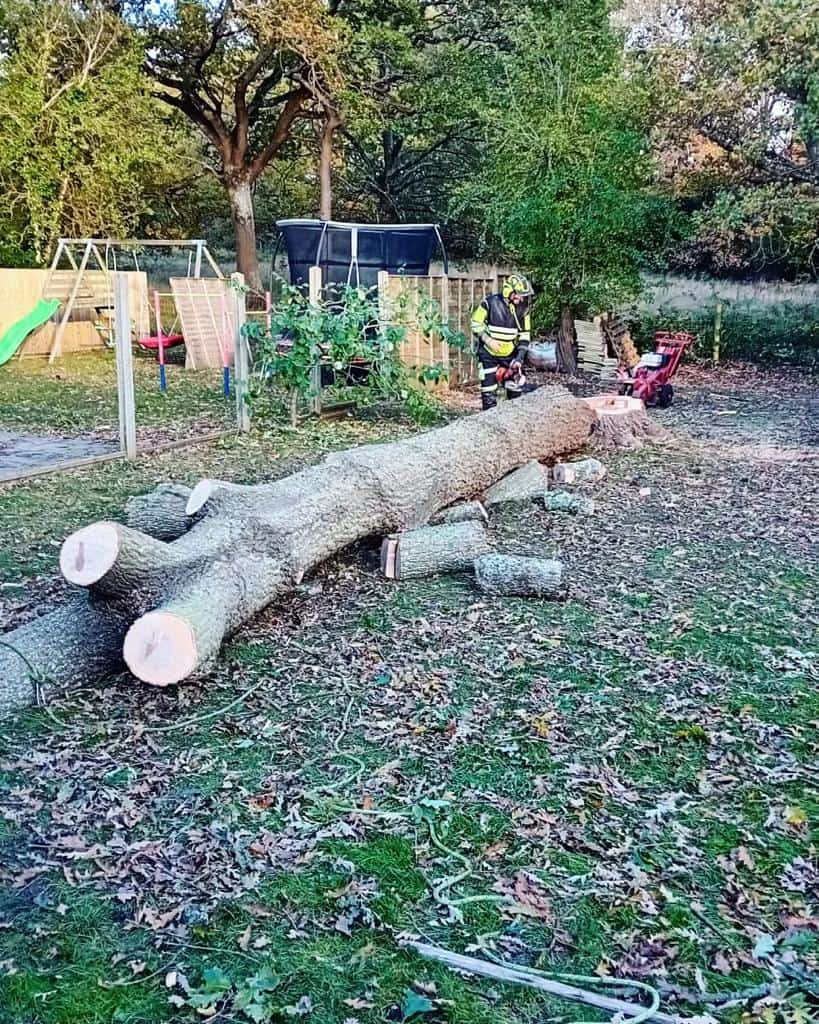
Trees can add structure, shade and character to a garden, but their requirements change as they mature. Branches that once fitted comfortably within the available space may eventually extend over buildings, obstruct paths, reduce light or place excessive weight on important unions.
Professional tree surgery can manage this growth before it becomes difficult to control. The objective is not simply to make a tree smaller. Appropriate work should respond to its species, structure, condition and surroundings while preserving healthy growth wherever possible.
For property owners in Selsey, Hampshire, periodic assessment can help identify when selective pruning or another form of tree surgery would be beneficial.
Managing Overgrown Trees Through Professional Tree Surgery
An overgrown tree does not automatically need extensive pruning or removal. In many cases, targeted work can resolve the specific issue while retaining the tree’s natural appearance.
Early intervention is particularly valuable. Correcting a developing problem usually involves smaller cuts and less disruption than waiting until large branches have outgrown their position.
Selective Pruning Can Control Unwanted Growth
Tree pruning can remove or shorten individual branches that are growing in unsuitable directions. This may include branches extending towards a roof, crossing a pathway or interfering with another part of the crown.
Selective work is often appropriate where the overall size of the tree remains suitable but particular limbs require attention. It can improve clearance without unnecessarily reducing healthy sections of the canopy.
Each cut should be made at a suitable growth point to support an effective response from the tree.
Crown Reduction Can Manage Overall Size
Where the complete canopy has become too large for its setting, crown reduction may be considered. This involves shortening branches throughout the crown to decrease its height, spread or both.
Professional crown reduction follows the tree’s natural branch structure. Cuts are distributed carefully and made back to suitable lateral branches, helping the tree retain a balanced form.
The amount that can be removed safely depends on the species, age, vitality and existing structure. Excessive reduction can place the tree under avoidable stress and encourage weak regrowth.
Crown Lifting Can Improve Clearance
Lower branches may begin obstructing paths, driveways, garden seating or routine maintenance. Crown lifting removes or shortens selected lower growth to increase the usable space beneath the tree.
The work must preserve an appropriate relationship between the crown and trunk. Removing too many lower branches at once can affect the tree’s appearance and alter how forces are distributed through its structure.
When planned carefully, crown lifting can resolve access problems without reducing the entire canopy.
Crown Thinning Can Reduce Excessive Density
A dense crown can contain congested, crossing or poorly positioned branches. Crown thinning selectively removes suitable growth throughout the canopy without substantially changing its overall dimensions.
This can improve the distribution of branches and reduce unnecessary crowding. It may also allow more filtered light through the crown while retaining the tree’s established height and spread.
Thinning should not involve stripping out the inner canopy or leaving most foliage at the ends of long branches. Balanced selection is essential.
Deadwood Removal Can Address Weak Branches
Dead branches become increasingly brittle as they deteriorate. Their significance depends on their size, condition and position over the surrounding area.
Professional deadwood removal targets non-living branches that warrant attention while retaining healthy growth. It also provides an opportunity to inspect parts of the crown that may have been difficult to see previously.
A large amount of deadwood or continuing dieback may indicate a wider issue that requires further assessment.
Tree Surgery Can Correct Developing Imbalance
Trees sometimes grow unevenly because they are competing for light, responding to nearby obstacles or recovering from earlier branch loss. One side of the crown may become heavier or more extended than the other.
Selective pruning or crown reduction can improve the distribution of growth and shorten overextended limbs. This does not mean forcing the tree into a perfectly symmetrical shape. The aim is to work with its natural structure and reduce excessive imbalance where appropriate.
Regular Attention Can Avoid Severe Cutting Later
When an overgrown tree is left unmanaged for many years, achieving the desired clearance may require larger cuts. Larger wounds take longer for a tree to occlude and can influence its future growth.
Periodic inspection allows developing problems to be identified sooner. Modest, well-timed pruning can guide growth more effectively than infrequent and severe cutting.
Maintenance needs vary considerably between trees, so work should be based on condition rather than an arbitrary schedule.
Signs an Overgrown Tree Needs Assessment
Professional advice may be useful when:
- branches are touching or overhanging buildings
- access beneath the tree has become restricted
- long limbs are extending heavily in one direction
- branches are crossing, rubbing or becoming congested
- deadwood is developing above used areas
- the canopy is blocking significantly more light
- previous pruning has produced dense regrowth
- the tree has changed noticeably after severe weather
- repeated trimming is failing to control the problem
These signs do not all require the same treatment. An assessment helps identify the cause and select a proportionate response.
Why Topping Is Not a Suitable Solution
Cutting major branches back indiscriminately may make a tree smaller quickly, but it can leave large wounds and an unnatural structure. It may also trigger vigorous shoots that are poorly attached and require further management.
Professional tree surgery uses suitable pruning points and considers how the tree is likely to respond. This produces a more sustainable result than removing large sections without regard for branch structure.
Choosing the Correct Tree Surgery Method
The appropriate service depends on the outcome required. Selective pruning may create local clearance, crown lifting can improve access beneath the canopy, and crown reduction can manage overall dimensions.
In some cases, the tree may need little immediate work beyond monitoring. In others, decay, substantial damage or unsuitable positioning may require a broader discussion about its future.
A professional inspection should consider:
- species and growth habit
- age and vitality
- branch structure
- previous pruning
- signs of decay or damage
- proximity to surrounding features
- the intended use of the garden
- the tree’s likely response to pruning
This avoids unnecessary work while ensuring that genuine problems receive appropriate attention.
Conclusion
Professional tree surgery can prevent overgrown trees from becoming problematic by controlling unsuitable growth, improving clearance, removing deadwood and addressing developing imbalance. Early, selective work generally provides a better outcome than waiting until extensive pruning is required.
If an overgrown tree is beginning to affect your garden in Selsey, Hampshire, LM Tree Surgery Selsey can assess its condition and recommend a suitable form of tree surgery. Contact our team to arrange a professional assessment and discuss the tree’s maintenance needs.
Call us on: 01243 217 387
Click here to find out more about LM Tree Surgery Selsey
Click here to complete our contact form and see how we can help with your tree needs.